The Myth That More Generation Always Means More Supply at the Right Time
More generation does not always mean more electricity where it is needed. Learn to diagnose shortages by checking timing, location and plant availability.
Adding a power station in the wrong place—or one that cannot run during the hours of need—may leave a local shortage untouched. To judge whether more generation would help, diagnose the gap first: identify where and when electricity is missing, then establish whether the shortfall comes from insufficient output, unavailable equipment or a blocked route.
That diagnosis is different from asking how an electricity system balances changing supply and demand from moment to moment. Here, the focus is narrower: whether a proposed increase in generation addresses the particular weakness behind a reported shortage.
Define the shortage
Start by asking what “short” means in the claim. Is a whole system expected to lack enough supply during a particular period, or is one neighbourhood experiencing a local constraint? Is the concern about energy over a season, power during a peak, or a specific generator that is out of service?
These distinctions matter because energy and power describe different things. Energy accumulates over time; power is the rate at which electricity is produced or used. A high annual energy total can coexist with weak output during a cold evening, while a local network constraint can affect customers even when the wider system has ample generation.
Write down the claim’s time and place before debating its remedy. A national annual total cannot, on its own, explain a local interruption or a difficult evening peak. Ask for the relevant operating period and network area.
Separate the causes
A useful diagnosis sorts the problem into a few distinct causes. They can overlap, but each points towards a different remedy.
- Not enough output: If available generation across the relevant system is below expected demand, then consider additional generation or other resources capable of supplying electricity during that period; if output is adequate overall, check location and delivery instead.
- Wrong generation profile: If output is strong at some times but weak during the shortage, then assess resources that can produce during the gap; if the profiles already match, look for equipment outages or network limits.
- Unavailable plant: If a generator is offline, fuel-constrained or subject to operating restrictions, then investigate the specific availability issue; if it is operating as expected, check whether its output can reach the affected area.
- Blocked delivery: If transmission or distribution constraints prevent power reaching customers, then examine network capacity or local supply options; if the route is clear, reconsider whether total available output is sufficient.
- Local connection limit: If a proposed project cannot connect or export as planned, then ask the network operator about connection conditions; if the connection is feasible, assess whether the project’s output occurs during the need.
- Unclear evidence: If a report gives only an annual total or installed-capacity figure, then request the time profile, location and availability assumptions; if those details are already present, compare them with the stated shortage.
It is not worth arguing over a headline capacity total before knowing what it represents. A rated capacity describes a generator’s capability under specified conditions, not the electricity it will deliver in every hour.
Match evidence to need
For a generation proposal, ask for an output profile that can be compared with the shortage period. For a local concern, ask which network area is affected and whether a transmission or distribution constraint has been identified. For an outage, establish whether the issue is planned maintenance, an unexpected failure, fuel access or another operating restriction.
Then compare like with like. A site’s annual production is not a direct answer to an evening power shortage; nor does a regional supply total tell you whether a particular feeder can serve a new development. Use the measure that fits the decision: energy over time for sustained production, power for a particular period, and network information for delivery.
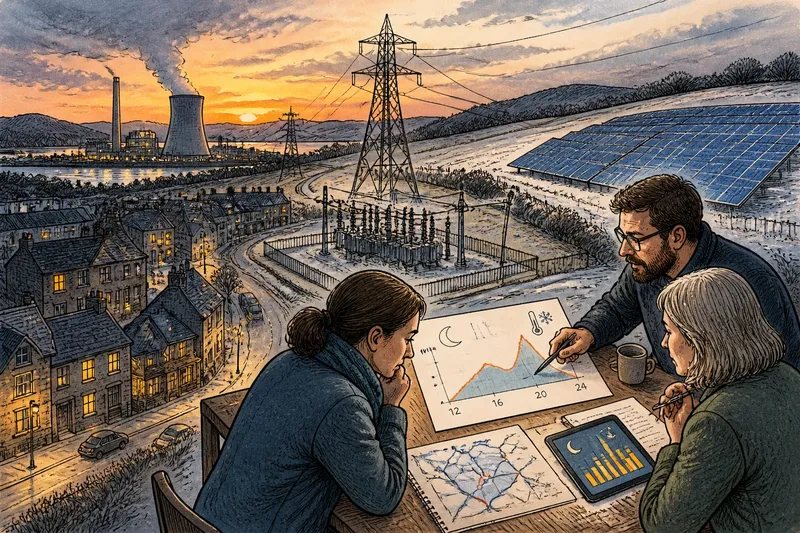
Say a fictional market town has a reported shortage on winter evenings. Its council is considering a solar farm on nearby land. The council first requests the shortage’s hourly profile and learns, in this invented situation, that the concern is concentrated after sunset; it then asks the network operator whether the proposed site can connect and what output is expected during those hours. If the network can accept the project but solar output is absent after sunset, the proposal may add useful energy at other times without directly addressing that evening gap. The council’s resulting decision is to compare it with options whose availability better matches the stated need, rather than treating the solar project as a complete remedy.
Check the remedy fit
Once the cause is clearer, test each proposed remedy against it. More generation may address a broad shortfall, but its location, operating pattern and availability still matter. A network upgrade can improve delivery across a constrained route, but it cannot supply electricity that is not being generated. A local generator may help a particular area, provided it can connect and produce at the needed time.
For a community project, ask the local distribution network operator about connection capacity and export conditions before assuming that nearby generation can serve nearby customers directly. For a larger planning decision, compare proposed output with the period and area identified in the diagnosis. If the evidence does not identify either, request clarification before choosing a remedy.
Questions worth asking?
Does annual generation answer an evening shortage?
No. Annual production can conceal hours when output is low, so compare generation with demand during the specific evening period.
Does installed capacity mean a generator is available?
No. Rated capacity describes capability under specified conditions, while maintenance, faults, fuel access and operating limits affect actual availability.
Can local generation fix a network bottleneck?
It may help if it can connect on the affected side of the constraint and supply the relevant need. Ask the network operator about local capacity and connection conditions.
What if the reported shortage has no clear time or place?
Ask for the period, affected area and measure being used before accepting a proposed fix. Without those details, it is difficult to tell whether the issue is generation, availability or delivery.
Keep the diagnosis specific
The phrase “more generation” is too broad to settle a shortage claim. Pin down the affected place and period, check whether equipment is available, and establish whether the network can deliver its output. That sequence keeps a proposed power station, network upgrade or local project tied to the problem it is meant to solve.
When you encounter a claim about more generation, look for those same particulars: time, place, output and delivery. If one is missing, ask for it. A specific diagnosis is more useful than a larger headline total because it makes clear what kind of supply would actually meet the need.