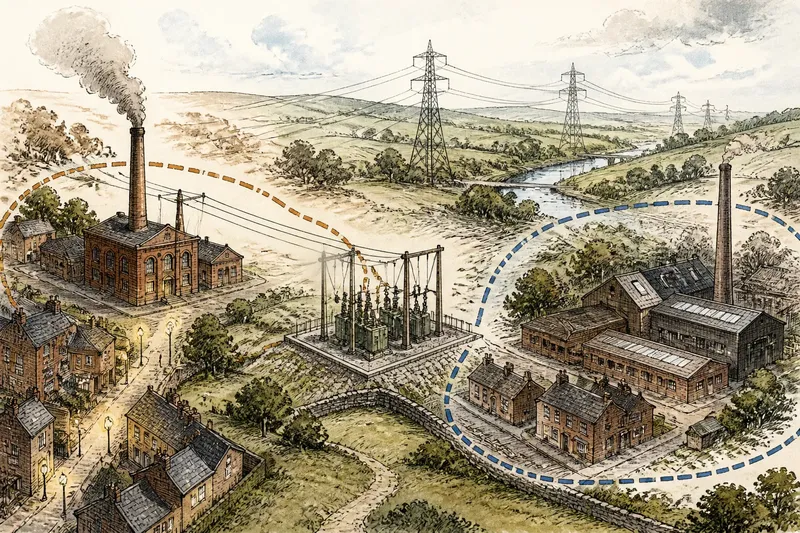
A Quiet Hour at Home: Notice Which Loads Run Together
Notice household electricity loads running together with a simple written record, so you can see daily demand patterns without measuring or changing equipment.
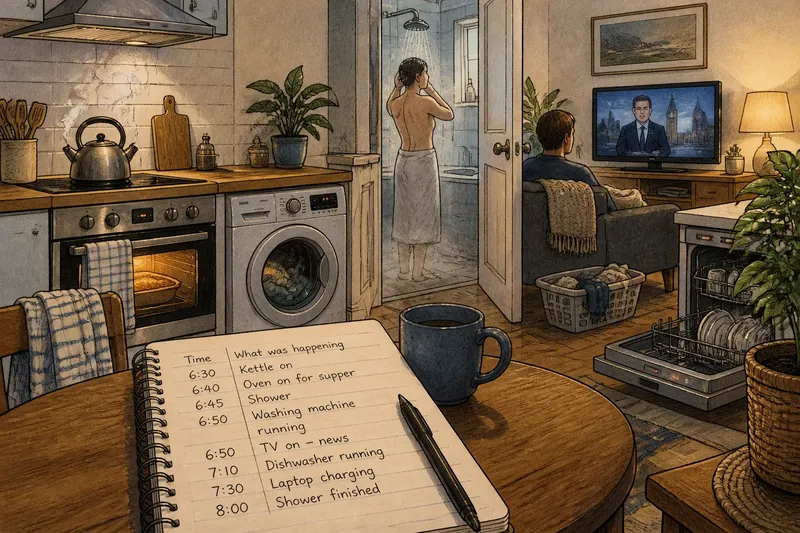
Household electricity loads running together are easiest to notice when you write down what is happening as it happens. A kettle boiling while the washing machine heats water, or the oven on as someone takes a shower, turns separate routines into a shared moment of demand. A quiet hour at home can reveal those overlaps without measuring electricity or changing how equipment works.
Choose an observation style
The useful question is not which appliance uses the most electricity. Without meter readings or equipment data, a written note cannot answer that reliably. Instead, record which activities were happening together and when. That gives you a small, honest picture of household timing—not a calculation of consumption.
Choose a method that fits your attention and the shape of your day:
- One-hour snapshot: Check the clock at the start, then note visible activities as they begin or continue. If the hour gives a clear picture of your routine, keep it as a snapshot; if activity changes too much, use routine-based notes instead.
- Routine-based notes: Keep paper or a notes app nearby during a familiar stretch, such as breakfast or the after-work period. If you can catch activities as they occur, use this method; if you keep missing starts and stops, choose a shorter snapshot.
- Several-day comparison: Make the same brief notes on ordinary days, including a working day and a weekend day if they differ at home. If the same cluster recurs, note it as a pattern; if the days vary widely, describe each separately rather than forcing one typical routine.
None is an energy audit. A snapshot is quick but narrow; routine-based notes cover more of the day but depend on remembering to write; repeated observations may reveal a recurring pattern but take more attention. Pick the lightest method you are likely to finish.
What belongs on the page
Use a notebook, scrap of paper or notes app. Make two columns: time and what was happening. Round the time to a convenient point rather than fussing over the exact minute. Write activities in everyday language: “oven on for supper”, “shower”, “laptop charging” or “washing machine running”.
Include equipment only when its use is visible in the routine. A running dishwasher, a lit room or a television in use is easy to note; hidden cycling inside a fridge is not. Do not open appliances, attach a meter or inspect wiring to make the record more complete. The exercise is about what you can ordinarily observe.
Keep the list neutral. “Laundry cycle running” is more useful than “wasteful laundry”, and “several lights on” is clearer than a guess about their electricity use. If you do not know when something started, note that it was already running when you checked. A modest record beats a precise-looking one built on guesses.
Read the overlaps
After the observation, look for activities that share the same time window. You might notice a cluster around breakfast, when cooking, hot water and devices being charged coincide, or a quieter patch while the household is out. These are timing patterns, not evidence that one appliance caused a problem or that any particular hour is unusually demanding.
Say you choose a weekday evening and note supper cooking, a shower, a washing cycle and a television programme as they occur. Your page shows the oven and shower overlapping, while the laundry continues later. The resulting answer is that these activities coincided during the observed hour; their relative electricity use remains unknown, so the notes alone do not tell you to move one.
Look for the shape of the household routine rather than a winner in an imagined league table. Ask whether overlaps are regular or occasional, whether an activity continues across several others, and whether the same cluster appears on another ordinary day. If the answer is unclear, write “not sure” rather than filling the gap with an assumption.
Which approach fits?
A one-hour snapshot suits a low-effort start and a fairly predictable hour. Choose routine-based notes if activity begins and ends throughout the day, or if you are away during one fixed window. Repeat the observation when weekday and weekend habits differ enough that one page would give a misleadingly narrow view.
The choice can also depend on how you prefer to pay attention. A notebook near the kitchen suits someone who notices activities as they happen. A phone note may be easier if you move between rooms, though entering every small event can become tiresome. It is not worth creating a complicated table, tracking every light switch or trying to account for appliances you cannot see; extra detail can make this simple exercise feel like bookkeeping without making the pattern clearer.
If the notes leave you curious about actual energy use, treat that as a separate question. Electricity bills, an in-home display or information from your supplier may offer other kinds of insight, depending on what is available to you. A written observation alone cannot rank appliances or estimate their consumption.
Questions about household loads?
Do I need a smart meter?
No. The exercise records visible activities and their timing, not electricity readings. A meter can answer different questions, but it is not needed to notice overlaps.
How long should I observe?
One ordinary hour is enough for a snapshot. If routines change through the day, make brief notes across a familiar period or repeat the snapshot on another typical day.
Should I change when appliances run?
Not for this exercise. First make the record and see what it says; a cluster on paper does not by itself show that shifting an activity is useful or appropriate.
What if I miss an activity?
Leave the gap or mark the note as approximate. This is a practical sketch of visible routines, not a complete account of every electrical load in the home.
Keep the record useful
Put a date or simple day label at the top, then add a short note about what made it unusual, if anything: visitors, a day at home or a meal cooked later than usual. That context helps you avoid treating an atypical evening as the household’s normal rhythm. Keep personal details out if the notes might be shared.
Household electricity loads running together become easier to discuss once their timing is visible. A brief list can help you describe a routine to someone else, compare two kinds of day or decide whether you want a different kind of information. Keep the record modest: its useful result is a clearer picture of what coincides, not a verdict on how the home should run.